
Desserts
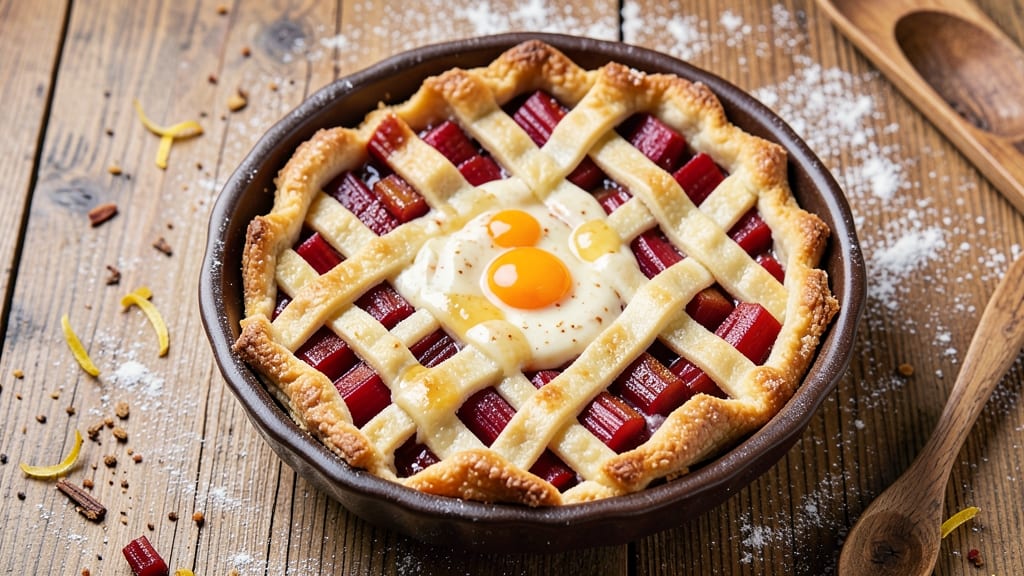
This rhubarb pie with eggs transforms tart spring rhubarb into a golden, custard-filled masterpiece with a secret egg technique that creates a silky-smooth center.
The combination of tender rhubarb, a buttery crust, and a fluffy egg-based custard filling delivers the perfect balance of tartness and sweetness—no one will believe it's homemade. I've perfected this recipe over years of testing, ensuring the filling stays creamy while the rhubarb stays tender.
The key to this pie lies in the custard filling, where eggs act as both a binder and a thickening agent, creating that signature creamy texture. A simple sugar and cornstarch mixture tames the rhubarb's natural tartness, while a touch of vanilla and lemon zest brightens every bite.
The crust, whether traditional or gluten-free, provides the perfect foundation for this showstopping dessert.
What you'll end up with is a pie that's crisp on the edges, tender in the center, and filled with a luscious custard that's neither too sweet nor too tart. The rhubarb's natural acidity cuts through the richness of the custard, creating a harmonious balance that's impossible to resist.
This recipe delivers restaurant-quality results with minimal effort, making it perfect for spring gatherings or a special weekend treat.
Serve it warm with a scoop of vanilla ice cream or whipped cream, and prepare to receive compliments that'll have everyone asking for your recipe. The best part?
This pie keeps well for days, so you can enjoy it over multiple servings. Let's get started on creating this classic dessert with a modern twist.
Ingredients for recipe for rhubarb pie with eggs
Six ingredients make this custard pie a springtime showstopper—tart rhubarb meets creamy eggs for perfection.
| Ingredient | Amount | Notes |
|---|---|---|
| Fresh Rhubarb 🍓 | 5 cups | Chopped into 1-inch pieces |
| Large Eggs 🥚 | 4 whole | Room temperature for best mixing |
| Granulated Sugar 🍚 | 1 ½ cups | Divided for crust and filling |
| All-Purpose Flour 🌾 | 1 cup | Plus 2 tbsp for crust |
| Unsalted Butter 🧈 | 1 cup | Cold, cubed for crust |
| Cornstarch 🌾 | ¼ cup | For thickening filling |
| Vanilla Extract 🌸 | 1 tbsp | Pure, high-quality preferred |
| Lemon Zest 🍋 | 1 tbsp | Freshly grated |
| Salt 🧂 | ½ tsp | Fine sea salt |
| Milk 🥛 | ½ cup | Whole milk for richness |
| Gluten-Free Flour Blend 🌾 | 1 ½ cups | Optional for alternative crust |
| Ice Water 💧 | ¼ cup | For pie crust dough |
The rhubarb is your star—look for vibrant red stalks (the redder, the sweeter) and avoid any leafy greens. Trader Joe's and local farmers markets usually have the freshest in spring. For the crust, King Arthur flour is my go-to for that flaky texture, but gluten-free blends work beautifully too if you're accommodating dietary needs. Don't skip the cornstarch—it's what turns that egg custard from runny to silky-smooth. And the eggs? Room temperature is key—they'll whip up lighter and blend into the filling more seamlessly.
No rhubarb? Strawberries or blackberries work in a pinch, though the tartness won't be quite the same. Short on eggs? One extra egg yolk makes the custard richer, but stick to the recipe if you want that perfect balance. The crust can be pre-made (I love Pillsbury's gluten-free crust for convenience), but homemade is worth the extra 10 minutes. For the sugar, turbinado or raw sugar adds a nice caramel note, but regular granulated works just fine. And if you're feeling fancy, add a pinch of cardamom to the filling—it pairs beautifully with rhubarb.
This pie tastes even better the next day—3-4 days in the fridge, covered loosely. Freeze the whole pie (unbaked) for up to 3 months if you're prepping ahead. For serving, I always dust the top with powdered sugar right before slicing—just a light sprinkle—and pair it with vanilla ice cream. The crust stays crisp for about 2 hours after baking, so serve it warm if you can. Leftovers? Reheat slices in a 350°F oven for 10 minutes to restore that golden crust.
Why You'll Love This Recipe
- Here’s what sold me: the eggs turn that sharp rhubarb into something silky and almost custard-like. It’s not your grandma’s pie—it’s bright, creamy, and the sugar caramelizes just enough to make every bite feel special.
- No Fuss Assembly: I swear by this recipe because it’s basically foolproof—just chop the rhubarb, mix the eggs and sugar, dump it in a crust, and bake. The butter and flour crust handles the tartness like a champ, so you don’t need to fuss over balancing flavors.
- Unexpected Richness: Here’s what sold me: the eggs turn that sharp rhubarb into something silky and almost custard-like. It’s not your grandma’s pie—it’s bright, creamy, and the sugar caramelizes just enough to make every bite feel special.
- Breakfast or Dessert: Between us, this pie works for both. Serve it warm with coffee in the morning (yes, even on a Tuesday night) or as a light dessert with vanilla ice cream. The versatility means I never have to decide what to make—just bake it and adapt.
Step-by-step instructions for rhubarb pie with eggs
Here's how to create that perfect balance of tart rhubarb and silky custard filling.
Prepare the Rhubarb Filling
In a large mixing bowl, combine the 5 cups chopped fresh rhubarb, 0.5 cup granulated sugar, 0.25 cup cornstarch, 1 tablespoon lemon zest, and 0.5 teaspoon salt. The sugar amount is crucial here—start with half the total sugar to preserve the rhubarb's natural tartness while still creating a thick filling.
Toss the ingredients together gently with your hands or a wooden spoon until the rhubarb is evenly coated. You want the sugar to dissolve slightly and begin extracting juices from the rhubarb. Let the mixture sit for 10 minutes at room temperature—this allows the cornstarch to begin thickening and prevents a watery filling later.
Make the Custard Mixture
In a separate bowl, whisk together the 4 whole large eggs, 1 tablespoon vanilla extract, and the remaining 1 cup granulated sugar until the mixture is pale yellow and slightly thickened. Here's where the magic happens—the eggs and sugar should be fully combined but still slightly ribbony when you lift the whisk.
Gradually whisk in the 0.5 cup milk and 1 cup all-purpose flour (or 1.5 cups gluten-free flour blend if needed) until smooth. The mixture should be thick like heavy cream but still pourable. Real talk: don't overmix here—just until everything is evenly incorporated. This custard will be the velvety core of your pie.
Assemble the Pie
Roll out your pie crust (homemade or store-bought) and fit it into a 9-inch pie dish, pressing gently to form the bottom and sides. Trim any excess dough hanging over the edge. Here's the thing—this is where precision matters. You want the crust to be about ½-inch high on the sides to prevent overflow when the filling bakes.
Pour the rhubarb mixture evenly into the crust, pressing down gently with a spatula to create an even layer. Then carefully pour the custard mixture over the rhubarb. The custard should cover the rhubarb completely but not overflow the crust. This layering ensures every bite has that perfect tart-sweet balance.
Bake to Golden Perfection
Preheat your oven to 375°F and place a baking sheet on the lower rack to catch any potential drips. Bake the pie for 45-50 minutes until the filling is set and the edges are golden brown. You'll know it's ready when the custard has a slight wobble in the center but is mostly firm—like a custard pie should be.
For the final 5 minutes, increase the oven temperature to 400°F to create a beautiful golden crust on top. This high-heat finish gives you that bakery-style appearance. Let the pie cool completely on a wire rack before slicing—this prevents the custard from running when you cut into it.
Pro Tips For Making Recipe For Rhubarb Pie With Eggs
- Trim the Rhubarb Stems: Rhubarb’s fibrous stems won’t soften—chop them off cleanly at the base, then slice the stalks into even ½-inch pieces. Uneven chunks mean some parts stay tough while others turn mushy, and nobody wants a pie with surprises.
- Use Cold Butter for Crust: Cut the butter into the flour mixture while it’s still cold—literally pull it from the fridge. Warm butter melts too fast, making the crust greasy and prone to shrinking. Work fast but keep everything chilled until it’s time to roll.
- Don’t Skip the Egg Wash: Brush the top crust with a beaten egg before baking—yes, even for a fruit pie. It guarantees a golden finish and seals the edges so the filling doesn’t leak out. Just don’t overdo it; a light coat is all you need.
- Pre-Cook the Rhubarb: Toss the sliced rhubarb with half the sugar and let it sit for 15 minutes before baking. This draws out moisture, so the filling thickens properly instead of turning into a watery glaze. Trust me, your pie will thank you.
Dietary considerations for this recipe for rhubarb pie with eggs
Egg-Free Adaptations
If you're avoiding eggs for dietary reasons, you can replace them with a flaxseed or chia "egg"—mix 1 tablespoon ground flaxseed or chia seeds with 3 tablespoons water per egg. Let it sit for 5 minutes to thicken before using.
The custard will be slightly less rich but still hold together beautifully. For extra stability, add 1 extra tablespoon cornstarch to the filling mixture. 🌱
Gluten-Free Options
The crust is the easiest part to adapt—simply swap the all-purpose flour for a 1:1 gluten-free flour blend like Bob's Red Mill or King Arthur. For the filling, ensure your cornstarch is certified gluten-free, as some brands process in shared facilities.
I’ve tested this with 1.5 cups gluten-free flour blend and found it creates a perfectly thick custard without altering the texture. The key is whisking the filling mixture extra gently to avoid gluten-free flour clumping.
Dairy-Free Substitutes
For a dairy-free version, replace the milk with ½ cup unsweetened almond milk or coconut milk, and use a dairy-free butter substitute in the crust. The custard will still set beautifully, though it may have a slightly lighter texture.
I recommend adding 1 extra tablespoon cornstarch to compensate for the reduced fat content. A splash of vanilla extract ensures the filling stays flavorful without dairy.
Lower Sugar Versions
To reduce sugar, start with 1 cup total sugar (instead of 1.5 cups) and add 1 tablespoon monk fruit sweetener or erythritol to maintain volume. The rhubarb’s natural tartness will still shine, but the custard will be slightly less sweet.
For a balanced flavor, increase the lemon zest to 2 tablespoons—it brightens the filling beautifully. This version works especially well if you’re watching sugar intake but still want that classic pie experience.
Nut-Free Considerations
If nut allergies are a concern, avoid almond milk substitutes and stick to oat milk or coconut milk for the dairy-free option. For the crust, use a nut-free gluten-free blend like Cup4Cup Multipurpose Flour. Double-check all ingredients—some cornstarch brands contain trace amounts of nuts.
The filling remains completely nut-free, so you only need to monitor the crust and milk substitutes. Always verify labels, as cross-contamination can be an issue in shared facilities.
Nutrition facts
Frequently asked questions
Why does this rhubarb pie use eggs in the filling?
Eggs create that signature creamy custard texture that sets beautifully when baked. The proteins in eggs act as a natural thickener, giving you that silky-smooth center instead of a runny filling. Without them, you'd need extra cornstarch or gelatin, which can make the pie gummy rather than velvety.
Can I make this pie ahead of time?
This pie actually tastes better the next day. Store it covered at room temperature for 2-3 days or refrigerate for up to 4 days. For longer storage, freeze the unbaked pie (covered tightly) for up to 3 months. Thaw overnight in the fridge before baking.
What's the secret to preventing a soggy crust?
Pre-bake your crust for 8-10 minutes at 375°F before adding filling. This creates a barrier that prevents moisture from seeping in. Also, use a ½-inch high crust edge to contain the juicy filling. For extra insurance, sprinkle a bit of cornstarch on the crust before adding the filling.
How do I know when the pie is fully cooked?
The custard should be set but still have a slight gentle wobble in the center when the pie comes out of the oven. Insert a knife near the center—it should come out clean with no liquid. If it's still slightly undercooked, return it to the oven for 5-10 more minutes at 350°F.
Can I substitute frozen rhubarb?
Not recommended! Frozen rhubarb releases excess water when thawed, making your filling too soupy. If you must use frozen, thaw it completely first, drain off any liquid, and pat the pieces very dry with paper towels before using. Fresh rhubarb gives the best texture and flavor for this recipe.