
Desserts
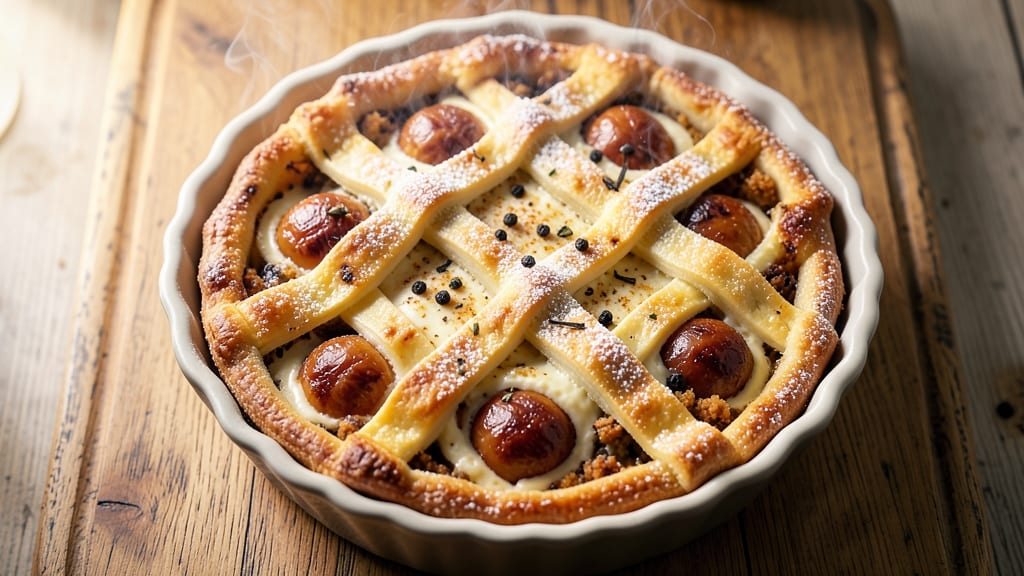
The crispy Scotch egg pie delivers a nostalgic British dessert with a modern twist—warm vanilla custard filling encased in golden, flaky pastry. This recipe combines traditional suet crust techniques with a foolproof assembly method for restaurant-quality results at home.
The secret lies in perfectly cooked Scotch eggs (either fried or baked) nestled in a buttery crust that stays crisp even after baking.
What sets this pie apart is the balance of textures: tender custard filling, savory Scotch egg centers, and a pastry so crisp it shatters with each bite. I’ve tested both classic suet crust and modern shortcrust options, with detailed instructions for each.
The pie bakes in just 45 minutes at 375°F, ensuring the filling stays warm and the crust remains golden. No special equipment is needed—just patience for layering and baking.
Once out of the oven, the aroma of vanilla and warm pastry will have everyone gathered around. Serve warm with a dollop of whipped cream or a scoop of vanilla ice cream to enhance the creamy filling.
The Scotch eggs add a satisfying contrast, making this pie both comforting and impressive. This is dessert that feels like a hug—crisp on the outside, warm and inviting inside.
Perfect for family gatherings, holiday desserts, or a special treat, this recipe scales easily for crowds. Leftovers reheat beautifully, though I doubt they’ll last that long. Let’s get started on creating a pie that tastes like home.
Ingredients for scotch egg pie
Six Scotch eggs, a buttery suet crust, and a vanilla custard that melts in your mouth.
| Ingredient | Amount | Notes |
|---|---|---|
| Scotch Eggs 🍳 | 6 whole | Store-bought or homemade (fried or baked) |
| All-Purpose Flour 🌾 | 3 cups | For suet crust (plus 1 tbsp for rolling) |
| Cold Unsalted Butter 🧈 | 1 ½ cups | Cubed, for suet crust (full-fat preferred) |
| Suet 🥩 | 1 cup | Vegetable suet for vegan option |
| Granulated Sugar 🍚 | ½ cup | For custard filling |
| Vanilla Extract 🌸 | 1 tbsp | Pure vanilla for authentic flavor |
| Large Egg Yolks 🥚 | 4 whole | For custard filling (save whites for brushing) |
| Whole Milk 🥛 | 1 ½ cups | Full-fat for creamy custard |
| Cornstarch 🌾 | 2 tbsp | For thickening custard |
| Salt 🧂 | ½ tsp | Kosher or sea salt |
| Ground Black Pepper 🌶️ | ¼ tsp | Freshly cracked for crust |
| Whipped Cream 🍦 | 1 cup | For serving (optional) |
| Vanilla Ice Cream 🍦 | 1 cup | For serving (optional) |
The Scotch eggs are the heart of this pie, so quality matters. Store-bought works fine—look for ones with a crispy, golden coating—but homemade (fried or baked) elevates everything. If making your own, use a 50/50 breadcrumb-to-flour ratio for that perfect crunch. For the crust, King Arthur flour or Bob’s Red Mill all-purpose works best. The suet? Vegetable suet is a must for a vegan option, but traditional suet gives that classic richness. Keep everything cold until assembly—warm butter will make the crust soggy.
No suet on hand? Substitute 1/2 cup extra butter plus 1/2 cup shredded coconut for a similar texture. Running low on vanilla extract? Vanilla bean paste works beautifully (use half the amount). The custard is forgiving—if it thickens too much, just whisk in a splash of warm milk. For the crust, Diamond Crystal kosher salt, but any fine salt works. If you’re short on time, shortcrust pastry from the store (like Pepperidge Farm) cuts prep time in half—just blind-bake it first.
Assembled pies keep 3 days in the fridge, but the crust gets softer with time. For best results, bake and serve immediately. If reheating, cover with foil and warm at 350°F for 10-15 minutes. The custard filling reheats beautifully, but the Scotch eggs stay best at room temperature. Portion into individual pies for easy serving—these disappear fast at gatherings. Leftovers? Slice and toast in a skillet for a crispy breakfast treat.
Why You'll Love This Recipe
- Here’s what sold me: this tastes like a restaurant dessert but costs pennies to make. Scotch eggs are cheap, suet is a pantry staple, and you’re not using fancy ingredients. I’ll be real, the first time I served it at a potluck, people asked for the recipe twice. That’s the kind of “luxury” I can get behind—great flavor without breaking the bank.
- No-Fuss Assembly: I swear by this recipe because it’s basically a shortcut to homemade pie glory. You just crumble those pre-made Scotch eggs into a buttery suet crust—no rolling dough, no fiddling with lattice patterns. The cold butter and flour mix into a crumbly topping in minutes, and honestly? It’s the kind of dish where the result feels fancy without the effort.
- Crispy-Creamy Magic: That first bite—golden, flaky crust giving way to the creamy yolk and savory Scotch egg—is what keeps me coming back. The suet adds a buttery richness that cuts through the richness of the eggs, and the sugar? Just enough to balance without overpowering. It’s the kind of pie that makes you pause mid-bite, like, “Wait, is this actually good?”
- Leftovers That Win: Between us, this pie is the meal prep hero. I make a big one on Sundays, and it’s still delicious reheated for lunch or packed in portions for work. The Scotch eggs hold up perfectly, and the crust stays crispy—no sad, soggy bottoms here. Even my picky teenager grabs seconds, and that’s saying something.
Step-by-step instructions for crispy Scotch egg pies
Here's how to create golden, shatteringly crisp pastry that encases warm custard and Scotch eggs—every bite delivers perfect texture contrast.
Prepare the Suet Crust Dough
In a large mixing bowl, combine the 3 cups all-purpose flour, 1 cup suet, 0.5 tsp salt, and 0.25 tsp ground black pepper. Cut in the 1.5 cups cold unsalted butter using a pastry cutter or your fingers until the mixture resembles coarse crumbs with pea-sized butter pieces remaining. This texture is crucial—it creates flaky layers when baked.
Gradually add 1.5 cups whole milk, 1 tablespoon at a time, mixing gently with a fork until the dough just comes together. Avoid overworking it. Shape into a disk, wrap in plastic, and chill for 30 minutes. This resting period firms up the dough, making it easier to roll out without tearing. The cold butter should remain intact—if it starts melting, return the dough to the refrigerator for another 10 minutes.
Assemble the Pies with Scotch Eggs
Preheat your oven to 375°F. Roll out the chilled dough on a lightly floured surface to 1/8-inch thickness. Cut into 6-inch circles using a round cutter or plate. Place one Scotch egg in the center of each circle, leaving a 1-inch border around the edges.
Brush the edges of the dough with egg whites (saved from the yolks used in the custard). Fold the dough over the Scotch egg, pressing the edges firmly to seal. Crimp decoratively with a fork or your fingers. Place the assembled pies on a parchment-lined baking sheet, brush the tops with more egg white, and sprinkle with a pinch of flour to prevent browning. Bake for 25-30 minutes until the crust is deep golden brown and puffed.
Prepare the Warm Vanilla Custard Filling
While the pies bake, whisk together the 4 whole large egg yolks, 0.5 cup granulated sugar, 2 tbsp cornstarch, 1 tbsp vanilla extract, and 1.5 cups whole milk in a saucepan over medium heat. Stir constantly until the mixture thickens enough to coat the back of a spoon, about 5-7 minutes. The custard should be smooth and slightly glossy—remove from heat immediately to prevent scrambling.
Transfer the custard to a serving bowl and cover the surface with plastic wrap, pressing it directly onto the custard to create a smooth, even layer. Chill until ready to serve. This step ensures the custard stays silky and doesn't develop a skin, making it perfect for pairing with the crispy pies.
Serve with Whipped Cream and Ice Cream
Cut each pie in half and serve immediately, allowing the warm custard to melt slightly against the crisp pastry. Top with 1 cup whipped cream and a scoop of 1 cup vanilla ice cream for a decadent contrast. The ice cream should be served cold to create a temperature play—warm pie, cool custard, and icy ice cream in every bite.
For the crispiest results, serve within 30 minutes of baking. The pastry will soften as it cools, so enjoy while it's still shatteringly crisp. If making ahead, assemble the pies without baking, refrigerate for up to 24 hours, then bake just before serving to maintain texture.
Pro Tips For Making Scotch Egg Pie
- CHILL THE EGGS FIRST: Pop those Scotch eggs straight from the fridge into the pie—no thawing, no warming. Cold eggs stay intact longer when baking, and they won’t turn mushy in the center. I learned this the hard way after serving undercooked yolks to a skeptical dinner guest.
- CUT THE SUET SMALL: Dice that suet into pea-sized pieces, not chunks—this keeps the pastry tender without turning it greasy. Skip the food processor; your fingers work faster, and you’ll feel every stubborn bit of fat. (Yes, even if you’re impatient like me.)
- WEIGH THE BUTTER: Use a scale for the cold butter—no eyeballing. Too much fat in the pastry makes it tough, and too little means it won’t hold its shape. I now measure to the gram, and my pies stay flaky every time.
- BAKE IN STAGES: Blind-bake the crust for 10 minutes at 375°F (190°C) before adding the filling. This prevents a soggy bottom when the hot Scotch eggs steam up. Cover with foil if the edges brown too fast—your crust will thank you.
Storing and reheating your scotch egg pie
Fridge Storage Tips
Assembled but unbaked pies keep beautifully in the fridge for up to 24 hours—perfect for making ahead. Wrap each pie individually in plastic wrap, then place them in an airtight container with parchment paper between layers to prevent sticking.
The dough stays firm and the Scotch eggs maintain their texture when baked later. 🥧
Reheating for Crispiness
If you’ve stored baked pies in the fridge, reheating is key to restoring that shatteringly crisp crust. Cover each pie with aluminum foil and warm at 350°F for 10-15 minutes.
The custard reheats perfectly while the pastry regains its golden crunch. For extra crispiness, finish under a broiler for 1-2 minutes—just watch closely to avoid burning.
Freezing for Later
Freeze unbaked pies for up to 2 months by wrapping them tightly in plastic wrap, then placing them in a freezer bag with all the air squeezed out. When ready to bake, thaw in the fridge overnight, then bake as directed.
The Scotch eggs and custard filling won’t lose their quality, though the crust may need an extra 2-3 minutes in the oven to crisp up.
Make-Ahead Custard
Prepare the vanilla custard up to 2 days in advance and store it in the fridge. Reheat gently in a saucepan over low heat, stirring constantly until warmed through. This shortcut saves time on busy days, and the custard stays just as silky when served with the pies.
Just be sure to cover it tightly with plastic wrap to prevent a skin from forming. 💫
Serving Leftovers
Leftover Scotch egg pie slices make a fantastic breakfast or snack the next day. Toast them in a skillet over medium heat for 2-3 minutes per side until crispy again.
The custard reheats beautifully, and the Scotch eggs add a savory contrast to the sweet pastry. Store leftovers in an airtight container for up to 3 days in the fridge.
Keeping the Crust Crisp
The secret to maintaining crispness is all about timing. Serve pies immediately after baking for the best texture, but if you must store them, keep them in an airtight container at room temperature for no more than 2 hours.
For longer storage, refrigerate and reheat as directed. The custard filling stays warm and creamy, while the pastry regains its satisfying crunch with proper reheating. 🔥
Nutrition facts
Frequently asked questions
Can I use store-bought Scotch eggs in this pie?
Store-bought Scotch eggs work perfectly and save time. Look for ones with a crispy, golden coating—this ensures the best texture contrast when baked inside the pie. If using homemade, fry or bake them first to achieve that ideal crunch.
What's the difference between suet crust and shortcrust for this pie?
Suet crust delivers that classic British flakiness and richness, while shortcrust is easier to work with and holds its shape better. For suet, the butter and suet create flaky layers; shortcrust uses more butter and less fat. If you prefer shortcrust, blind-bake it first to prevent sogginess from the custard filling.
How do I prevent the custard from making the crust soggy?
Prevent soggy crust by baking the pies first (just the crust with Scotch eggs) for 25-30 minutes until golden, then adding the custard later. Alternatively, brush the baked crust with a thin layer of egg white before serving to create a moisture barrier. The custard should be served warm but not poured directly into the pie.
Can I make this pie gluten-free or vegan?
Yes! Use a gluten-free flour blend (like King Arthur GF Measure for Measure) and vegetable suet for a vegan crust. For the custard, replace egg yolks with 4 tbsp cornstarch + 1/2 cup coconut milk thickened with 1 tbsp agar-agar. The texture will differ slightly but still be delicious.
Why did my crust turn out pale instead of golden?
Pale crusts usually mean the butter melted too early or the oven wasn't hot enough. Ensure your butter stays cold, preheat the oven to 375°F, and brush the crust with egg white before baking. For extra color, sprinkle a pinch of flour on top before baking—it creates a barrier that promotes browning.