
Desserts
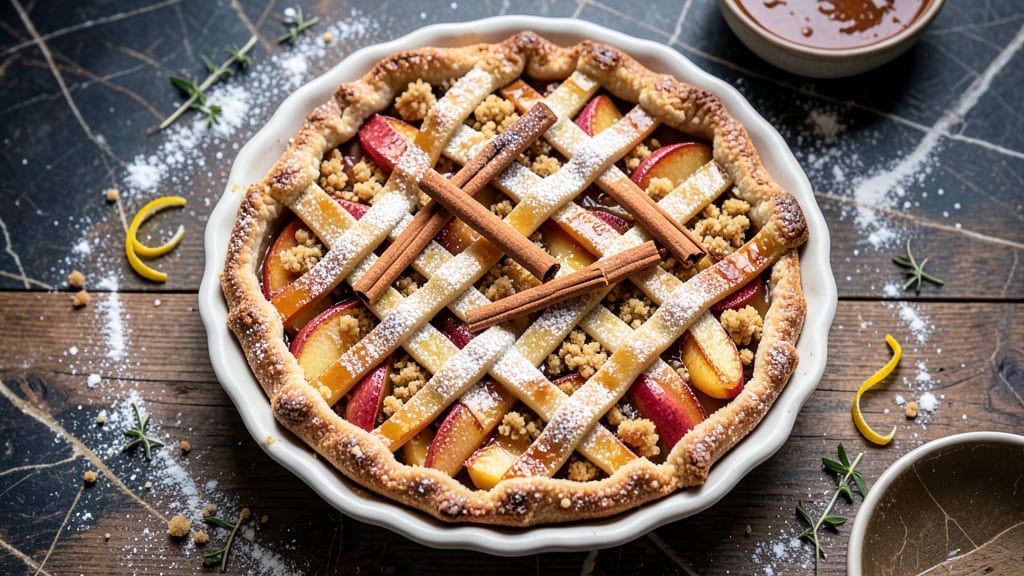
This real Dutch apple pie recipe brings the cozy charm of Amsterdam straight to your kitchen, where warm cinnamon and buttery pastry create a dessert that feels like a hug.
The secret lies in the spiced filling—cinnamon, clove, and raisins mimic the traditional Dutch appeltaart—while a delicate lattice crust keeps every slice crisp and golden. I’ve perfected this version after years of testing, ensuring the filling stays tender while the crust achieves that signature flaky crunch.
The Dutch approach to apple pie differs from American styles in key ways: less sugar, more spices, and a crust that’s rolled thin for maximum crispness.
You’ll work with a simple buttermilk crust (or store-bought if short on time), but the real magic happens in the filling—where tart apples caramelize with warm spices and a touch of raisin sweetness. Baking at 375°F for 45–50 minutes ensures the lattice stays crisp while the filling sets just right.
What makes this pie truly special is the balance of textures: the buttery lattice crackles with each bite, the filling stays moist without being soggy, and the spices linger like a warm autumn breeze.
Serve it with vanilla ice cream or whipped cream for the full Dutch experience—though I promise, you’ll want to eat it straight from the pan. The aroma alone will have your whole house asking for seconds.
This recipe delivers restaurant-quality results with minimal fuss—no fancy techniques, just authentic flavors and a foolproof method. Whether you’re baking for family gatherings or a quiet weekend treat, this pie will become your new standard. Let’s get started on creating something truly special.
Ingredients for real dutch apple pie
Pantry staples meet Dutch tradition—just 13 ingredients for a pie that tastes like home.
| Ingredient | Amount | Notes |
|---|---|---|
| All-Purpose Flour 🌾 | 3 cups | Sifted for light texture |
| Unsalted Butter 🧈 | 1 cup | Cold, cubed for crust |
| Granulated Sugar 🍚 | ½ cup | Less sugar for authentic taste |
| Buttermilk 🥛 | ½ cup | Cold for flaky crust |
| Large Egg 🥚 | 1 whole | Room temperature |
| Ground Cinnamon 🌿 | 2 tbsp | Freshly ground preferred |
| Ground Cloves 🌶️ | 1 tsp | Freshly ground for warmth |
| Granny Smith Apples 🍎 | 6 medium | Peeled, sliced thin |
| Light Brown Sugar 🍚 | ½ cup | Packed for moisture |
| Raisins 🍇 | ½ cup | Plump, rinsed |
| Lemon Juice 🍋 | 2 tbsp | Freshly squeezed |
| Salt 🧂 | ½ tsp | Kosher or sea salt |
| Vanilla Extract 🌸 | 1 tsp | Pure vanilla preferred |
The apples are non-negotiable here. Granny Smiths give that perfect tartness, but Honeycrisp or Braeburn work too. I always buy my apples from Whole Foods or the local farmers market—they hold up better when sliced. Peel them first, then slice them paper-thin (about 1/8-inch). The raisins? Golden raisins if you can find them, but regular will do. And don't skip the lemon juice—it keeps the apples from browning while you prep. The cinnamon and cloves? Penzeys Spices has the best ground versions, but any quality brand works if it's fresh.
No buttermilk? Mix 0.5 cup milk + 0.5 tbsp vinegar and let it sit for 5 minutes. Short on time? Store-bought pie crust saves the day—just make sure it's unsalted if you're adding extra salt to the filling. Want more spice? Add 0.25 tsp nutmeg. Less sugar? Reduce to 0.35 cup total. The crust gets rolled thin—1/8-inch thick—so don't stress if it cracks a little during baking. It's supposed to look rustic, like a real Dutch bakery.
This pie tastes even better the next day, so bake it ahead if you can. Store covered at room temp for 2 days, or freeze the whole pie for 3 months. I always make two—one for dinner, one for breakfast the next morning with a scoop of vanilla ice cream. The lattice? Cut the strips 1/2-inch wide for that perfect crisscross. And save the scraps—toss them in the compost or make apple butter with the peels.
Why You'll Love This Recipe
- No-Roll Crust Hack: I swear by this butter-and-flour shortcut—just mix, press, bake. No chilling dough, no rolling stress, and that buttery crumb? Chef’s kiss. The buttermilk in the filling keeps it tender, so even if your hands are floury, the pie stays perfect.
- Buttery-Sweet Magic: That first bite of warm crust with the caramelized sugar and spiced apples? Honestly, it’s the kind of flavor that makes you pause mid-slice. The egg in the crust gives it a golden sheen, and the butter? It’s the star—rich, flaky, and impossible to resist.
- Weeknight or Holiday: Between us, this pie works for everything. Need a quick dessert after dinner? Done. Hosting Thanksgiving? Even better. The filling’s simple—just apples, sugar, and a pinch of cinnamon—but it tastes like you slaved over it. (Spoiler: You didn’t.)
Step-by-step instructions for Dutch apple pie
This is how you build a proper Dutch apple pie with that iconic lattice crust and spiced filling.
Make the Pie Crust
In a large bowl, combine the 3 cups All-Purpose Flour, 0.5 teaspoon Salt, and 0.5 cup Granulated Sugar. Cut in the 1 cup Unsalted Butter using a pastry cutter or your fingers until the mixture resembles coarse crumbs with pea-sized butter pieces. This texture is crucial—it ensures flaky layers when baked.
Add the 0.5 cup Buttermilk and 1 whole Large Egg to the dry ingredients. Mix gently with a fork until just combined—don't overwork the dough. Turn it out onto a lightly floured surface and knead briefly until smooth, about 2-3 minutes. Wrap in plastic and chill for 30 minutes while you prepare the filling.
Prepare the Spiced Apple Filling
Peel and slice the 6 medium Granny Smith Apples into ¼-inch thick slices. Toss them with the 0.5 cup Light Brown Sugar, 2 tablespoons Ground Cinnamon, 1 teaspoon Ground Cloves, 0.5 cup Raisins, 2 tablespoons Lemon Juice, and 1 teaspoon Vanilla Extract. Let this mixture sit for 10 minutes—this allows the flavors to meld and the apples to soften slightly.
Drain any excess liquid from the apple mixture using a fine-mesh strainer. You want a thick, syrupy filling that will hold its shape when baked. Spread this filling evenly in a 9-inch pie dish, leaving a ½-inch border around the edges for the crust.
Roll and Fit the Crust
Roll out the chilled dough to a 12-inch circle, about ⅛-inch thick. Fit it into the pie dish, pressing gently to adhere to the edges. Trim any excess dough hanging over the rim. Fold the overhang inward to create a decorative edge, or crimp with a fork for a rustic look.
Refrigerate the pie for 15 minutes while you prepare the lattice strips. This extra chill prevents the crust from shrinking during baking. Preheat your oven to 375°F—this temperature ensures a golden crust without burning the filling.
Create the Lattice Topping
Cut the remaining dough into 12 strips, about ½-inch wide. Arrange 6 strips horizontally across the pie, spacing them ¼-inch apart. Then, weave 6 vertical strips through the gaps, alternating the ends to create a checkerboard pattern. Press the strips gently to seal any gaps.
Brush the lattice and pie edges with egg wash (1 egg beaten with 1 tablespoon water) for a golden finish. Bake for 45-50 minutes until the crust is deep golden brown and the filling bubbles around the edges. The center should still have a slight jiggle—it'll firm up as it cools.
Cool and Serve
Let the pie cool on a wire rack for at least 2 hours before slicing. This resting period allows the filling to set and the juices to redistribute, preventing a runny pie. The lattice will crisp up as it cools, giving you that perfect crunch with every bite.
Slice into 8 equal wedges and serve warm with vanilla ice cream or whipped cream. The combination of warm spiced apples, buttery crust, and cool dairy creates the ultimate Dutch apple pie experience. Store leftovers in the refrigerator for up to 3 days—they reheat beautifully in a 350°F oven for 15 minutes.
Pro Tips For Making Real Dutch Apple Pie
- CHILL THE BUTTERMILK: Dutch apple pie crust relies on cold butter for flaky layers, but buttermilk’s warmth can melt it before mixing. Pop the buttermilk in the fridge for 10 minutes first—your crust will hold together better when rolling, and those butter pockets won’t turn to soup.
- CUT BUTTER IN SMALLER PIECES: I used to cube the butter like ice cubes, but that’s too much surface area for the flour to coat evenly. Instead, slice it into thin, uneven shards—about ½-inch thick. They’ll distribute better in the dough and stay cold longer, giving you that signature tender, flaky texture.
- DON’T OVERWORK THE DOUGH: Once you start folding and pressing the butter into the flour, stop when it just barely holds together. Overmixing develops gluten, and that’s the fast track to a tough crust. If it feels crumbly, that’s perfect—just shape it gently and let it rest.
- USE COLD APPLE FILLING: If you’re prepping the apples ahead, store them in the fridge until ready to use. Cold apples release less juice when baking, so your filling stays thick and less likely to turn into a soggy mess. Toss them with sugar and a pinch of cinnamon right before folding into the crust—freshness matters.
Troubleshooting this dish
Filling Too Watery
If your apple filling releases too much liquid during baking, it’s likely from overripe apples or excess juice. Always use firm, tart apples like Granny Smiths and drain them thoroughly after tossing with spices.
For extra insurance, sprinkle 1 tbsp cornstarch over the drained filling before baking—it absorbs moisture beautifully. 💧
Crust Shrinking
A shrinking crust usually means the dough wasn’t chilled enough or the pie wasn’t pre-baked. Let your rolled crust rest in the fridge for 30 minutes before fitting it into the dish, and consider blind-baking the bottom crust for 10 minutes at 375°F with pie weights before adding filling.
This creates a sturdy base that won’t pucker.
Lattice Not Crispy
Moisture is the enemy of crisp lattice strips. Brush the lattice with egg wash just before baking (not too much) and avoid overfilling the pie—leave that ½-inch border for airflow.
If your strips still turn soggy, bake the pie on the lower oven rack for 5 minutes at the start to dry them out.
Undercooked Center
An undercooked center usually means the pie wasn’t baked long enough or the filling was too thick. Increase baking time by 5-10 minutes and check the internal temperature—it should reach 190°F in the center.
For extra insurance, tent the pie with foil after 30 minutes to prevent over-browning while the middle finishes cooking.
Burnt Edges
Burnt edges happen when the crust bakes too quickly. Lower the oven temperature to 350°F for the final 10 minutes of baking, or cover the edges with foil if they brown too fast.
A light egg wash helps too—just brush it on 10 minutes before the pie finishes baking for a golden finish without burning.
Filling Too Dry
Dry filling often results from overbaking or insufficient moisture in the apples. Reduce baking time by 5 minutes and add 1 tbsp apple juice or water to the filling before baking.
For extra richness, sprinkle 2 tbsp chopped toasted walnuts over the filling before adding the lattice—they add moisture and crunch. 🍏
Nutrition facts
Frequently asked questions
Why does this Dutch apple pie use cloves?
Cloves are a traditional Dutch spice in appeltaart that adds warm, aromatic depth. The Dutch often use a mix of cinnamon and cloves for that signature cozy flavor—think of it like a spiced hug for your pie. Start with 1 teaspoon and adjust to taste if you prefer milder heat.
Can I make this pie with store-bought crust?
For convenience, use two 9-inch unsalted pie crusts—one for the bottom, one for the lattice. Just roll the second crust ⅛-inch thick and cut strips for weaving. Chill the pie for 15 minutes before baking to prevent shrinking.
How do I prevent a soggy bottom crust?
Prevent sogginess by blind-baking the bottom crust for 10 minutes at 375°F with pie weights or dried beans. This creates a sturdy base. Also, leave a ½-inch border around the filling for proper airflow and crispness.
What’s the best way to store leftovers?
Store slices in an airtight container at room temperature for 2 days, or freeze for 3 months. Reheat individual slices in a 350°F oven for 10–15 minutes until warm and crispy.
Can I use a different type of apple?
While Granny Smiths are ideal for their tartness, Honeycrisp or Braeburn work too. Avoid overly soft apples like McIntosh—they’ll turn mushy. Mix varieties for balance, but always peel and slice them ¼-inch thick.