
Desserts
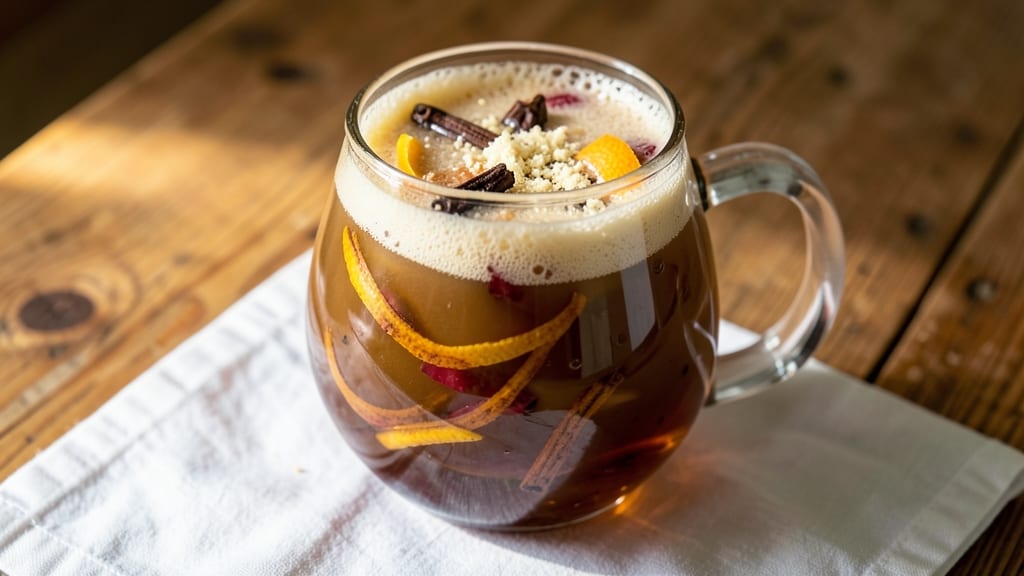
This apple pie cider homebrew recipe transforms fresh apples into a spiced, fermented drink that tastes like autumn in a glass. 🍂 The process combines traditional cider-making with warm baking spices—cinnamon, cloves, and nutmeg—to create a beverage that pairs perfectly with apple pie.
What makes this recipe special is the balance of natural sweetness and subtle spice, achieved through careful fermentation and flavor infusion.
The foundation of great hard cider starts with quality apples—use a mix of tart and sweet varieties for depth. After pressing and fermenting, you’ll infuse the liquid with spices while it’s still warm, ensuring every sip carries that cozy, pie-like aroma.
The result is a drink that’s smooth, slightly effervescent, and packed with autumnal warmth, making it ideal for sipping by a fire or serving alongside dessert.
Fermentation transforms simple apple juice into a complex, flavorful beverage, but the process requires patience and attention to detail. You’ll need basic brewing equipment—a sanitized fermentation vessel, airlock, and siphon—but the steps are straightforward once you understand the science behind it.
The key is monitoring temperature and fermentation time to achieve the perfect balance of sweetness and alcohol content.
Once complete, your homemade cider will be ready to enjoy—either chilled for a refreshing drink or warmed with a cinnamon stick for a true apple pie experience. The recipe also includes optional variations, like adding vanilla or orange peel, to customize the flavor to your taste.
Whether you're a seasoned homebrewer or trying this for the first time, the result is a beverage that tastes like a hug from fall.
Ingredients for apple pie cider recipe homebrew
Four pounds of apples, warm spices, and a touch of yeast create this autumnal hard cider.
| Ingredient | Amount | Notes |
|---|---|---|
| Fresh Apples (Mix of Tart and Sweet) 🍎 | 4 lb | Use Honeycrisp, Granny Smith, and Fuji |
| Cinnamon Sticks 🌿 | 4 whole | Whole for infusion, not ground |
| Whole Cloves 🌶️ | 6 whole | Pound lightly to release oils |
| Ground Nutmeg 🌿 | 1 tsp | Freshly grated preferred |
| Orange Peel (Organic) 🍊 | 1 tbsp | Dried, no pith |
| White Granulated Sugar 🍚 | 2 cups | Or sub maple syrup 1:1 |
| Distilled Water 💧 | 1 gallon | Sanitized for brewing |
| Active Dry Yeast 🍄 | ¼ oz | Champagne or cider yeast |
| Lemon Juice (Fresh) 🍋 | ¼ cup | Acidifier for fermentation |
| Vanilla Bean (Optional) 🌸 | 1 whole | Split lengthwise for infusion |
| Campden Tablets (Optional) 💊 | 1 tablet | For sterilization |
| Baking Soda 🧂 | ½ tsp | For pH adjustment |
The apples are the soul of this cider—Honeycrisp for sweetness, Granny Smith for tartness, and Fuji for balance. Local orchards or grocery store bins are your best bet for freshness. If you can't find organic, just wash thoroughly. The spices? Whole cinnamon sticks and cloves release flavor better than ground—trust me, it's worth the extra step. For yeast, Champagne or cider-specific strains from homebrew shops give the cleanest finish. And always use distilled water—tap water can introduce wild yeast and ruin the batch.
No cinnamon sticks? Ground cinnamon at half the amount works in a pinch, but you'll miss that deep infusion. Cloves too strong? Cut back to 4 whole cloves. Want extra warmth? Add 1 star anise or 1/4 tsp cardamom. The Campden tablets are optional but highly recommended if your apples aren't organic—1 tablet per gallon kills off wild yeast and bacteria. For the sugar, maple syrup or honey adds complexity, but white sugar keeps things clean. And if you're feeling fancy, vanilla bean adds a pie-like depth that's absolutely essential for that cozy vibe.
This cider needs 3-5 days of fermentation at 68-72°F—keep it away from drafts. Once fermented, it'll keep 6-12 months unopened in a cool, dark place. Bottle in sanitized swing-top bottles or growlers. For serving, chill for 2 hours to highlight the apple notes, or warm gently with a cinnamon stick for a true apple pie experience. Leftovers? Freeze in ice cube trays for cocktails later.
Why You'll Love This Recipe
- No Peel Required: I swear by this trick—just toss in whole apples, cinnamon sticks, and cloves. The heat does all the work, softening everything perfectly without me even touching a peeler.
- Spiced Like Fall: That mix of tart apples, warm nutmeg, and zesty orange peel? It’s like autumn in a mug, but better because I control the strength. Plus, the cloves add a hidden depth—subtle but unforgettable.
- Weeknight Magic: Simmer it while you prep dinner, then sip while the kids argue over homework. By the time you’re done, you’ve got a drink that tastes like you slaved over it—and zero extra effort.
- Leftovers That Shine: This batch actually gets better the next day. I freeze extras in ice cube trays for quick cocktails later, or pour them into jars for guests. (Yes, even my coffee-loving brother asks for seconds.)
Step-by-step instructions for crafting spiced apple cider booze
Here's how to transform fresh apples into rich, spiced cider with homebrew depth.
🍳 Step 1: Prepare and Sterilize Your Brewing Equipment
First, sanitize all equipment using the 1 tablet Campden Tablets (Optional) dissolved in 1 quart of the 1 gallon Distilled Water. This prevents contamination during fermentation. I like to use a clean sanitizing solution for my fermenter, airlock, and any tools that will touch the cider. Let everything soak for 10 minutes before use.
While the equipment sanitizes, peel and core the 4 lb Fresh Apples (Mix of Tart and Sweet) and chop them into ½-inch chunks. The mix of tart and sweet varieties creates that perfect balance in the final product. Tart apples like Granny Smith add brightness, while sweeter Honeycrisp and Fuji round out the flavor. Don't worry about perfect uniformity—just aim for consistent sizes to ensure even extraction.
👨🍳 Step 2: Create the Spice Infusion Base
In your sanitized fermenter, combine the chopped apples with the remaining ¾ gallon Distilled Water (reserving ¼ gallon for later). Add the 4 whole Cinnamon Sticks, 6 whole Whole Cloves (lightly pounded), 1 tbsp Orange Peel (Organic), and 1 tsp Ground Nutmeg. The whole spices infuse beautifully over time, releasing their oils gradually for complex flavor.
Give everything a gentle stir to ensure the spices are fully submerged. Cover the fermenter with a clean cloth and let it steep at room temperature for 24 hours. You'll know it's ready when the liquid takes on a deep amber color and the aroma fills your kitchen with warm spice notes. This infusion step is where the magic begins—those spices transform simple apple juice into something truly special.
🍳 Step 3: Add Sugar and Acid for Fermentation
After the infusion, strain out the apple chunks and spices using a fine-mesh bag or cheesecloth. Press gently to extract all the liquid, then return it to the fermenter. Add the 2 cups White Granulated Sugar and 0.25 cup Lemon Juice (Fresh) to the strained liquid. The sugar feeds the yeast, while the lemon juice provides necessary acidity for proper fermentation.
Stir well to dissolve the sugar completely. If you're using the 1 whole Vanilla Bean (Optional), split it lengthwise and add it to the fermenter along with the seeds. The vanilla will add a subtle depth that complements the apple and spices beautifully. Now's also the time to add the reserved ¼ gallon Distilled Water to reach your desired volume.
⏰ Step 4: Pitch the Yeast and Begin Fermentation
Rehydrate the 0.25 oz Active Dry Yeast by sprinkling it over ½ cup of the warm (95-105°F) fermenting liquid and letting it sit for 10 minutes until dissolved. Pour the yeast mixture back into the fermenter and attach your airlock. Place the fermenter in a dark, warm spot (around 70-75°F) where it won't be disturbed.
Fermentation should begin within 12-24 hours, indicated by bubbling in the airlock. Let it ferment actively for 5-7 days, checking the specific gravity daily with a hydrometer. You're looking for a reading of about 1.000 to indicate fermentation is complete. This process transforms the sweet apple cider into a lightly effervescent, spiced beverage with just the right kick.
🥘 Step 5: Adjust pH and Bottle for Carbonation
Once fermentation is complete, remove the fermenter from the airlock and stir in the 0.5 tsp Baking Soda to adjust the pH slightly. This helps prevent future contamination and ensures a clean taste. Taste the cider at this stage—it should be dry and slightly tart with all the spice notes you infused earlier.
Transfer the cider to sanitized bottles, leaving about 1 inch of headspace at the top. Cap the bottles tightly and store them at room temperature for 3-5 days to allow for natural carbonation. You'll know it's carbonated when the bottles feel slightly firm to the touch. Once carbonated, refrigerate to slow further fermentation and enjoy your homemade apple pie cider booze within 1-2 weeks for optimal freshness.
Pro Tips For Making Apple Pie Cider Recipe Homebrew
- Peel Thin, Slice Even: I used to hack through apple peels with a knife—messy and uneven. Grab a vegetable peeler instead, then slice the fruit into ¼-inch strips (no smaller, or it turns to mush). Tart apples like Granny Smith hold shape better than Honeycrisp, so use them for structure.
- Toast Spices First: Skip throwing whole spices into cold cider—you’ll just steep blandness. Lightly toast cinnamon sticks and cloves in a dry pan for 30 seconds until fragrant (watch them like a hawk; they burn fast). This unlocks their flavor and cuts through the sweetness.
- Strain Twice, Once Hot: After simmering, strain out the solids through a fine-mesh sieve—once while hot, then again after chilling. The first pass removes big chunks; the second catches the fine pulp that makes cider cloudy. (Yes, it’s extra work, but your cider will look like it came from a farm stand.)
- Finish with Citrus Zest: Hold off on adding orange peel until the very end—5 minutes before serving. Simmering too long turns it bitter, and fresh zest brightens the whole batch. Use a microplane for ¼ teaspoon of zest (no peel—just the colorful top layer). It’s the one thing that makes homemade taste like a fall festival.
Serving suggestions for this dish
Pie Pairing Perfection
Serve this spiced cider alongside a warm slice of classic apple pie for the ultimate autumnal experience. The cider's cinnamon and nutmeg notes mirror the pie's spices, creating a harmonious flavor bridge.
I like to dust the pie with powdered sugar and serve it with a scoop of vanilla bean ice cream—the cold cream contrasts beautifully with the warm, fermented cider. 🍂
Cocktail Variations
Turn your cider into a cocktail by mixing ½ cup cider with ½ cup ginger beer and a squeeze of fresh lemon for a fizzy Apple Pie Fizz.
For a boozy twist, add 1 oz bourbon and garnish with a cinnamon stick. The cider's natural sweetness balances the spice perfectly, making it ideal for holiday gatherings. 🍹
Warming Spiced Ritual
For a cozy night in, warm 1 cup cider in a small saucepan with 1 cinnamon stick and 2 star anise pods until steaming (don’t boil). Strain and serve in mugs with a sprinkle of ground nutmeg.
Pair with buttery shortbread cookies for a dessert-like experience that feels like a hug from fall. ❄️
Chilled Refreshment
Chill the cider for 2 hours before serving over ice in mason jars with a rosemary sprig for garnish. The cold temperature highlights the apple's crispness, while the rosemary adds a fresh herbal note. This is perfect for picnics or summer barbecues when you want that autumnal taste year-round. 🌿
Baking Booster
Use leftover cider to deglaze pans after cooking meats or as a baking liquid for cakes and muffins. The spiced cider adds moisture and depth to baked goods—try it in apple pie filling or as a glaze for pork tenderloin.
The alcohol will cook off, leaving behind rich apple and spice flavors. 🍰
Gift-Worthy Presentation
Bottle the cider in swing-top bottles with custom labels (use waterproof vinyl for a polished look). Add a cinnamon stick as a decorative stopper for a rustic, giftable touch. This makes a thoughtful present for friends who love homemade treats or holiday entertaining. Perfect for Christmas or Thanksgiving gatherings! 🎁
Nutrition facts
Frequently asked questions
Can I use store-bought apple cider instead of fresh apples?
No—fresh apples are essential for authentic flavor and proper fermentation. Store-bought cider often contains preservatives that can inhibit yeast activity. If fresh apples aren't available, use organic, unsweetened apple juice with no additives. For best results, always start with fresh fruit to capture the true apple pie-inspired depth.
How do I know when fermentation is complete?
Fermentation is done when the airlock stops bubbling for 24 hours and your hydrometer reads 1.000. Taste-testing is also key—it should be dry with no sweetness remaining. If bubbles persist, wait another 24 hours before bottling to avoid over-carbonation.
What alcohol percentage can I expect from this recipe?
With this method, you'll typically get 5-7% ABV depending on fermentation conditions. Cooler temperatures (68°F) yield lower alcohol, while warmer (72°F) increases it. For stronger cider, add ½ cup more sugar before yeast addition.
Can I skip the Campden tablets if my apples are organic?
While organic apples reduce contamination risk, the Campden tablets still help prevent wild yeast/bacteria. If skipping them, use extra clean equipment and monitor fermentation closely. For non-organic apples, always include the tablets—they're your best defense against spoilage.
How long will my finished cider keep before going flat?
Properly bottled cider stays fresh for 6-12 months unopened in a cool, dark place. Once opened, refrigerate and consume within 1 week. For longer storage, freeze in ice cube trays—thawed cider makes great cocktails!