
Desserts
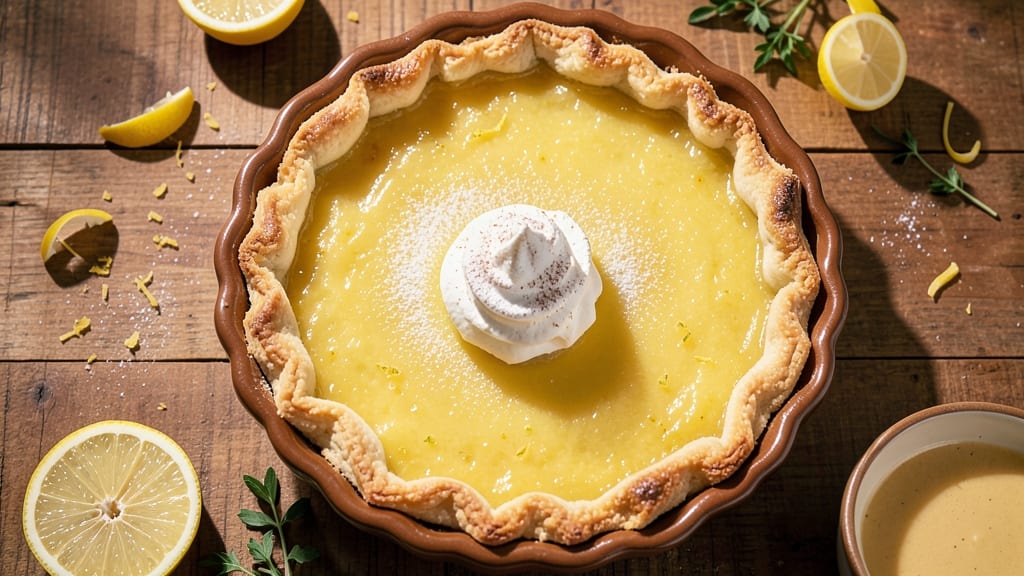
This Amish lemon pie recipe delivers the perfect balance of zesty crust and tangy filling that’s become a beloved tradition in many kitchens. The secret lies in a buttery, flaky crust that holds up beautifully to the bright, citrusy filling—just like Grandma used to make.
What sets this recipe apart is the hand-folded pie technique, creating those classic Amish lattice patterns that make every slice look as good as it tastes.
The filling is where the magic happens—a blend of fresh lemons, sweetened just enough to let the tartness shine through, and a touch of cream for richness.
The crust, made with a mix of butter and lard for that signature flakiness, bakes up golden and crisp, while the filling stays perfectly set—neither too runny nor too firm. This recipe stays true to its roots while being simple enough for modern bakers to pull off with confidence.
What you’ll end up with is a pie that’s crisp on the outside, creamy and tangy on the inside, and topped with a lattice crust that adds both beauty and texture.
The aroma alone will have everyone gathering around the table, and the first bite delivers that perfect mix of sweet and sour that makes lemon pie a classic for a reason. It’s the kind of dessert that feels like a hug in pie form.
Best served slightly warm with a scoop of vanilla ice cream or whipped cream, this pie is perfect for summer picnics, church gatherings, or just a cozy weekend treat.
The recipe is designed to be adaptable—whether you’re using a traditional hand-folded lattice or a simpler cut-out design, the result will be just as delicious. Let’s get baking!
Ingredients for amish lemon pie
Buttery crust, zesty filling, and that classic Amish lattice—just six ingredients make this pie magic.
| Ingredient | Amount | Notes |
|---|---|---|
| All-Purpose Flour 🌾 | 3 cups | Sifted for flaky texture |
| Unsalted Butter 🧈 | 1 cup | Cold, cubed for crust |
| Lard 🧈 | ½ cup | For extra flakiness |
| Granulated Sugar 🍚 | 1 ½ cups | For crust and filling |
| Fresh Lemons 🍋 | 6 whole | Juiced and zested |
| Large Eggs 🥚 | 4 whole | Room temperature |
| Heavy Cream 🥛 | 1 cup | Full-fat for richness |
| Cornstarch 🌾 | 2 tbsp | For thick filling |
| Salt 🧂 | ½ tsp | Fine sea salt |
| Vanilla Extract 🌿 | 1 tsp | Pure vanilla flavor |
| Ice Water 💧 | ½ cup | For pie dough |
| Vanilla Ice Cream 🍦 | 2 cups | For serving (optional) |
The crust is where the Amish magic happens. That mix of cold butter and lard creates the signature flaky layers—King Arthur flour or Gold Medal works best for that tender bite. Grab Armour lard from the baking aisle (it’s the good stuff) or use leaf lard if you can find it. The secret? Keep everything cold—cubed butter straight from the fridge, ice water for the dough. If you're nervous about lard, coconut oil works in a pinch, though purists will notice the difference. Don't skip the ice water—this keeps the dough from getting tough.
Fresh lemons are non-negotiable here. Meyer lemons have that perfect sweet-tart balance, but regular lemons work too—just add a touch more sugar to the filling. No fresh lemons? Lemon juice from concentrate (like ReaLemon) is better than nothing, but you'll miss that bright citrus aroma. The cornstarch is key for that perfect set—don't substitute flour, or your filling will turn gummy. For the crust, if you're making a double crust, use half the sugar in the bottom crust to prevent burning. And that vanilla extract? Nielsen-Massey is the gold standard—cheaper brands taste like perfume.
This pie tastes even better the next day, so bake it ahead if you can. Store the crust separately in the fridge for up to 3 days, or freeze the whole pie for 2 months—just thaw overnight before serving. The filling keeps 4 days in the fridge, but trust me, it won't last that long. For serving, vanilla ice cream is classic, but whipped cream or even Greek yogurt adds a nice contrast. Pro tip: Brush the lattice with egg wash before baking for that golden finish—it's worth the extra minute.
Why You'll Love This Recipe
- No Fuss Crust: I swear by that lard-butter combo—flaky, golden, and actually holds together without cracking. Honestly, I’ve burned pie crusts before, but this one forgives me every time. Just mix, roll, bake, and move on.
- Zesty Brightness: That lemon juice cut through the sweetness like a summer breeze. Fresh lemons? Non-negotiable. The sugar caramelizes just enough to balance the tang, and the crust’s buttery warmth makes every bite feel like a hug.
- Potluck Star: Bring this to a gathering, and you’ll be the hero. It’s sturdy enough for slicing, serves a crowd, and even holds up if you’re that person who packs leftovers. (Between us, I’ve done it.)
- Budget-Friendly Luxury: Lard and butter might sound fancy, but they stretch further than store-bought crust. Plus, lemons are cheap in season, and the sugar? You’ll use half a cup. That’s a pie that won’t break the bank—or your dessert table.
Step-by-step instructions for Amish lemon pies
Here's how to create the legendary Amish lemon pie with that signature flaky crust and bright, tangy filling.
Make the Flaky Pie Crust
In a large bowl, combine the 3 cups All-Purpose Flour, 0.5 tsp Salt, and cut the 1 cup Unsalted Butter and 0.5 cup Lard into small cubes. Work quickly—cold fat is essential for flakiness. Use a pastry cutter or your fingers to mix until the mixture resembles coarse crumbs with pea-sized fat pieces.
Gradually add the 0.5 cup Ice Water, 1 tablespoon at a time, mixing gently with a fork until the dough just comes together. Be careful not to overwork it—this is where the magic happens. Shape the dough into a disk, wrap in plastic, and chill for at least 1 hour (or up to 2 days). The longer it rests, the better the layers will develop when baked.
Prepare the Zesty Lemon Filling
Juice all 6 whole Fresh Lemons (about 1½ cups juice) and zest them finely. In a medium saucepan, whisk together the lemon juice, zest, 1.5 cups Granulated Sugar, and 2 tbsp Cornstarch. Cook over medium heat, stirring constantly, until the mixture thickens enough to coat the back of a spoon—about 5-7 minutes. This is your tangy base, and it needs to be smooth.
Remove from heat and stir in the 1 cup Heavy Cream and 1 tsp Vanilla Extract. Let the filling cool completely before using—this prevents the pie from becoming watery when baked. The filling should be thick but pourable, with a vibrant lemon color that practically glows.
Roll Out and Assemble the Pies
Preheat your oven to 375°F. On a lightly floured surface, roll out half of the chilled pie dough to about ⅛-inch thickness. Cut into circles large enough for your pie pans (typically 9-inch). Press the dough into the pans, trimming any excess. Prick the bottom with a fork to prevent bubbling.
Pour the cooled lemon filling into the crusts, filling them about ¾ full. Roll out the remaining dough, cut more circles, and place them on top. Seal the edges by crimping with a fork or your fingers. Brush the tops with a bit of beaten egg (save the remaining 2 eggs for this) for a golden finish.
Bake Until Golden and Set
Bake the pies on the middle rack for 45-50 minutes, until the crusts are deep golden brown and the filling is just set. The centers should still have a slight wobble—this indicates they're perfectly cooked. If the edges brown too quickly, cover them with aluminum foil.
Let the pies cool completely on a wire rack before serving. The filling will thicken as it cools, creating that signature Amish lemon pie texture—tangy, creamy, and just sweet enough. The crust should be crisp and flaky, with layers that practically melt in your mouth.
Serve with Vanilla Ice Cream (Optional)
Slice the pies into wedges and serve warm or at room temperature. For the ultimate Amish dessert experience, scoop 2 cups Vanilla Ice Cream alongside each slice. The cold ice cream contrasts beautifully with the warm, zesty pie, balancing the flavors perfectly. Store any leftovers in the refrigerator for up to 3 days—though I doubt they'll last that long!
Pro Tips For Making Amish Lemon Pie
- Chill the Butter-Lard Mix: Amish lemon pie crust relies on cold fat for flakiness, but butter and lard behave differently. Cut the butter into pea-sized pieces first, then work in the lard—it’s softer and will melt faster if added all at once. Wrap the dough in plastic and refrigerate for at least 2 hours (or freeze for 30 minutes if you’re in a hurry). I learned this the hard way after one soggy-bottomed disaster.
- Zest Before Juicing: Skip the pre-juiced lemons—fresh zest is where the magic hides. Use a fine grater and rub the yellow part only (avoid the bitter white pith). For 4-5 lemons, you’ll need about 2 tablespoons zest and ½ cup juice. My grandmother swore by this, and she was right: the zest adds bright, aromatic depth that bottled lemon juice can’t match.
- Prevent Sugar Crystallization: The lemon filling’s sugar will crystallize if it cooks too fast. Whisk the sugar into the lemon mixture over low heat (or at room temp) until it fully dissolves—no lumps allowed. Then, thicken it with cornstarch (if your recipe calls for it) by mixing it with cold water first and adding it slowly while stirring constantly. I was skeptical until I tried it—no more grainy filling.
- Bake the Crust Blind, Then Again: Pre-bake the crust for 10 minutes at 375°F (350°F if your oven runs hot) with pie weights or dried beans, then remove the weights and bake another 5 minutes until the edges are set. This two-step approach prevents shrinking and ensures the crust holds its shape when the filling goes in. Does it look weird? Yes. Does it work? Every single time.
Troubleshooting this recipe
Filling Too Runny
If your lemon filling turns out too thin after baking, it’s usually because the cornstarch didn’t thicken properly or the filling wasn’t cooled enough before pouring.
I’ve found that undercooking the filling (removing it too early from heat) is the #1 culprit—always cook until it coats the back of a spoon. For an extra insurance policy, mix 1 extra tbsp cornstarch into 1 tbsp cold water, then stir it into the filling while hot.
This slurry method guarantees a perfect set every time. 💡
Crust Too Tough
Overworking the dough is the usual suspect here, but even more common is using warm butter or lard. Keep everything ice-cold—even your work surface—while rolling. I like to chill my rolling pin in the freezer for 10 minutes before use.
Another trick? Wrap the dough in plastic and press it flat into a ¼-inch thick disk before chilling. This prevents uneven rolling later. The dough should feel like cold butter, not doughy. 🧈
Lattice Not Holding
If your lattice collapses during baking, it’s likely because the dough wasn’t chilled long enough or the strips were cut too thin. For the classic Amish look, cut ½-inch wide strips and brush them lightly with egg wash before weaving.
I also recommend pre-baking the lattice on a parchment-lined tray at 375°F for 5-7 minutes before placing it on the pie. This gives the strips structure before they hit the hot filling. 🌟
Burnt Edges
This happens when the oven runs hot or the edges get too much direct heat. The fix? Cover the edges with aluminum foil after 20 minutes of baking, then uncover for the last 10 minutes to let them crisp.
I also recommend using dark-colored pie pans (like Wilton’s Dark Metal pans)—they absorb heat more evenly. If your oven runs hot, reduce the temperature to 350°F for the last 15 minutes of baking. ⚡
Filling Too Tart
If your pie tastes overwhelmingly sour, you likely used too much lemon juice or not enough sugar. The filling should have a bright lemon flavor, not a pucker.
For balance, add 1-2 tbsp more sugar to the filling while it’s still warm, or stir in 1 tbsp honey after cooling. I also recommend reducing the lemon juice slightly—start with 5 lemons instead of 6 if you’re unsure. Taste as you go! 🍋
Soggy Bottom
A soggy crust usually means the filling wasn’t thick enough or the crust wasn’t pre-baked. For insurance, I pre-bake the bottom crust (with pie weights or dried beans) at 375°F for 10 minutes before adding filling.
Another trick? Sprinkle 1 tbsp granulated sugar over the bottom crust before filling—this creates a light, crisp barrier. Also, chill the filling for at least 30 minutes before pouring to prevent steam buildup. 💫
Nutrition facts
Frequently asked questions about Amish lemon pie
Why does this recipe use both butter and lard for the crust?
The combination creates that signature Amish flakiness—lard adds richness and prevents shrinking while baking, while butter contributes flavor. For a lighter version, you can substitute 100% butter, but the texture won't be quite as tender. Traditional recipes use lard because it creates those beautiful, crisp layers that hold up perfectly against the tangy filling.
Can I make this pie without a lattice crust?
For a simpler version, use a single crust with a crimped edge or try a cut-out design. The recipe works just as well—just reduce the baking time by 5-7 minutes to prevent over-browning. If you want extra flair, brush the top with egg wash and sprinkle with coarse sugar before baking for a decorative finish.
How do I adjust the sweetness if I prefer less sugar?
Start by reducing the sugar in the filling by 2 tablespoons and taste as you go. For extra tartness, add 1 extra tablespoon lemon zest or a splash of fresh lemon juice. Remember, the pie will taste sweeter after chilling—always adjust while the filling is still warm to get the balance right.
What's the best way to store leftovers?
Keep the pie in an airtight container in the fridge for up to 4 days. For longer storage, freeze the whole pie (uncut) for up to 2 months. Thaw overnight in the fridge—never at room temperature—and reheat slices in the oven at 350°F for 10 minutes to restore freshness.
Can I use bottled lemon juice instead of fresh?
Fresh lemons give the best flavor, but if you must substitute, use 1½ cups bottled lemon juice (like ReaLemon) plus 1 extra tablespoon sugar to compensate for the lack of zest. The texture will be slightly less vibrant, but it'll still taste delicious—just not quite as bright and aromatic as fresh.