
Desserts
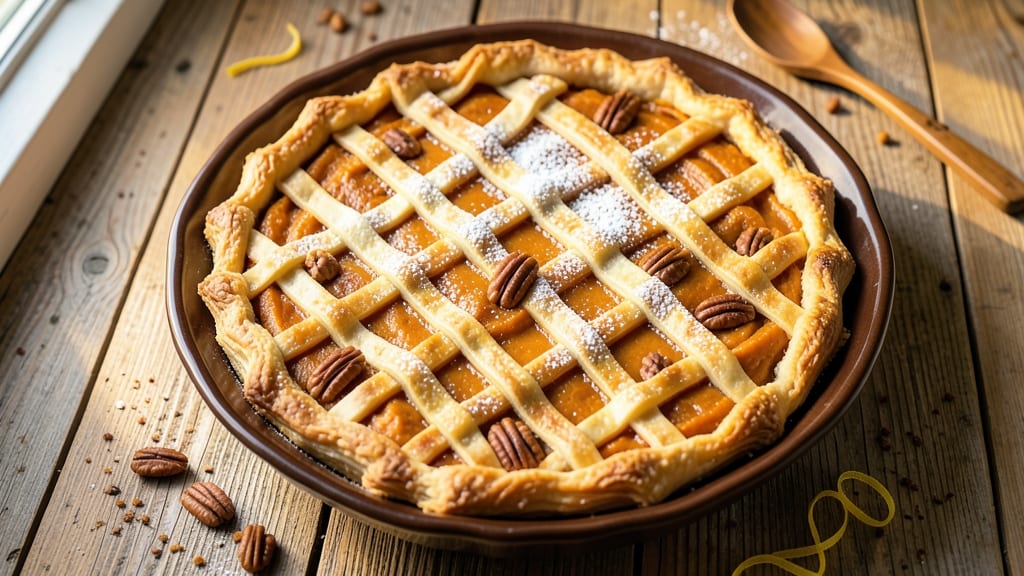
This African American pumpkin pie recipe brings the warmth of Southern traditions to your kitchen with a perfect balance of spiced filling and buttery crust.
The rich, aromatic blend of cinnamon, nutmeg, and ginger reflects the deep culinary heritage that has made pumpkin pie a staple in Black American cuisine for generations.
What sets this version apart is the attention to texture—flaky, golden crust that holds up to the velvety-smooth filling, baked to perfection in your home oven.
The secret to this pie lies in the slow-cooked pumpkin filling, which develops deep, caramelized flavors while maintaining its signature smoothness. Unlike some modern recipes that rely on shortcuts, this version uses real pumpkin purée and a carefully measured spice blend to create that authentic taste you crave.
The crust, made with all-purpose flour and a touch of brown sugar, achieves that signature flakiness through proper layering and chilling techniques.
By the time you pull this pie from the oven, you’ll have a dessert that’s both nostalgic and impressive—golden crust with a hint of caramelization, filling that’s just set but still creamy, and a scent that fills your home with comfort.
It’s the kind of pie that disappears quickly at gatherings, leaving guests asking for the recipe. The best part? It’s adaptable to modern kitchens while staying true to its roots.
Whether you’re serving it at Thanksgiving, a holiday celebration, or just because, this pie delivers the harmony of flavors and textures that make it a timeless classic. The instructions are straightforward, ensuring you achieve restaurant-quality results without the fuss.
Let’s get started on creating a pie that honors tradition while fitting seamlessly into today’s kitchen routines.
Ingredients for african american pumpkin pie
Pantry staples meet Southern tradition—just 13 ingredients for pie perfection.
| Ingredient | Amount | Notes |
|---|---|---|
| Pumpkin Purée 🎃 | 15 oz | Canned or homemade, unsweetened |
| All-Purpose Flour 🌾 | 2 ¼ cups | For crust, sifted preferred |
| Unsalted Butter 🧈 | 1 cup | Cold, cubed for crust |
| Granulated Sugar 🍚 | 1 ½ cups | White or light brown |
| Brown Sugar 🍚 | ¼ cup | Packed, for crust |
| Large Eggs 🥚 | 2 whole | Room temperature |
| Evaporated Milk 🥛 | 1 cup | Full-fat for creaminess |
| Ground Cinnamon 🌿 | 2 tsp | Freshly ground preferred |
| Ground Nutmeg 🌿 | ½ tsp | Freshly grated if possible |
| Ground Ginger 🌿 | 1 tsp | Freshly ground for warmth |
| Salt 🧂 | ½ tsp | Diamond Crystal preferred |
| Vanilla Extract 🍯 | 1 tsp | Pure, high-quality |
| Ice Water 💧 | ¼ cup | For crust dough |
The pumpkin purée is your foundation—Libby's or local canned works perfectly, but homemade adds depth. For the crust, King Arthur flour if you're picky, but anything all-purpose does the job. The butter? Plugrá or Land O'Lakes—don't use margarine, trust me. Nutmeg and ginger lose flavor fast, so buy whole and grind fresh if you can. I grab mine from Penzeys—worth the extra for that authentic warmth. The crust's secret? Chilling the dough for at least 2 hours—no shortcuts here.
No evaporated milk? Heavy cream or whole milk works in a pinch, but the texture won't be quite as rich. Freshly ground spices are non-negotiable for that authentic taste—dried spices at half the amount if that's all you've got. Vanilla extract? Pure, nothing imitation. For the crust, if you're short on butter, substitute with lard for flakiness (yes, it's traditional). The sugar ratio matters—too much and the crust gets tough, too little and it won't caramelize. I always weigh my sugar for precision, but packed cups work too if you're eyeballing it.
Store the crust dough between parchment paper in the fridge for up to 3 days. The filling keeps 5 days in the fridge—make ahead and thank me later. For the pie itself, cool completely before slicing or it'll be gummy. Leftovers? Reheat slices in a 350°F oven for 10 minutes—restores that perfect texture. Freeze the whole pie (unbaked or baked) for up to 3 months—just thaw overnight in the fridge before serving.
Why You'll Love This Recipe
- No-Fuss Assembly: I swear, this pie comes together faster than you can say "canned pumpkin." Just mix the purée with melted butter, sugars, and a splash of vanilla—no egg custard fussing. The flour crust? Roll it out in 10 minutes flat, no fancy techniques.
- Spiced Deep Comfort: That brown sugar and pumpkin purée combo? It’s like autumn in a slice—rich, caramelized, and just sweet enough to make your taste buds sing. Honestly, the cinnamon and nutmeg in this crust aren’t just seasoning; they’re the stars.
- Holiday or Weeknight Win: Serve it warm at Thanksgiving with vanilla ice cream, or slice it cold for a breakfast pie the next morning. Between us, I’ve even packed it in lunches—trust me, coworkers will ask for the recipe.
- Budget-Friendly Luxury: You’re using pantry staples here: butter, sugar, flour, and that one can of pumpkin purée you already own. No specialty ingredients, no markup—just pure, crave-worthy dessert for half the cost of store-bought. And leftovers? They last forever.
Step-by-step instructions for African American pumpkin pie
Here's how to craft a pie with a rich, spiced filling and a perfectly flaky crust that pays homage to traditional techniques.
Prepare the Buttery Crust
In a large mixing bowl, combine the 2.25 cups all-purpose flour and 0.25 cup brown sugar. Cut in the 1 cup unsalted butter using a pastry cutter or your fingers until the mixture resembles coarse crumbs with pea-sized butter pieces. This texture is crucial—it ensures a flaky crust rather than a tough one.
Add 0.5 teaspoon salt and 0.25 cup ice water, one tablespoon at a time, mixing gently with a fork until the dough just comes together. The dough should hold its shape when pressed but not be sticky. Divide it into two equal portions, flatten into discs, wrap in plastic, and chill for at least 1 hour—this resting time prevents shrinking during baking.
Roll and Blind-Bake the Crust
Preheat your oven to 375°F. On a lightly floured surface, roll one dough disc into a 12-inch circle, about ⅛-inch thick. Transfer it to a 9-inch pie dish, gently pressing it into the edges to create a slight overhang. Trim the excess, leaving about ½ inch for crimping later.
Line the crust with parchment paper, fill it with pie weights or dried beans, and bake for 15 minutes. Remove the weights and bake for another 10 minutes until the edges are light golden brown and the crust is set. This pre-baking step prevents a soggy bottom—trust me, it makes all the difference.
Whisk the Spiced Filling
In a medium bowl, whisk together the 15 oz pumpkin purée, 1.5 cups granulated sugar, 2 teaspoons ground cinnamon, 0.5 teaspoon ground nutmeg, 1 teaspoon ground ginger, and 0.5 teaspoon salt until completely smooth. The spices should be fully dissolved—this ensures even distribution of flavor in every slice.
In a separate bowl, beat the 2 whole large eggs and 1 cup evaporated milk until well combined. Gradually whisk this mixture into the pumpkin-spice blend, then stir in the 1 teaspoon vanilla extract. The filling should be thick but pourable—if it's too stiff, add 1-2 tablespoons of water to reach the right consistency.
Assemble and Bake to Perfection
Pour the filling into the pre-baked crust, smoothing the top with a spatula. Fold the overhang under itself and crimp the edges with your fingers or a fork to seal. Brush the crust with a bit of evaporated milk or beaten egg for a golden finish. Bake at 350°F for 45-55 minutes, until the filling is set but still slightly jiggly in the center.
Here's the thing—don't overbake. You want the center to have a gentle wobble when the pie is done. Let it cool completely on a wire rack before slicing, at least 2 hours. This patience ensures clean cuts and prevents a runny filling. The aroma of warm spices will fill your kitchen, and every bite will be pure comfort.
Pro Tips For Making African American Pumpkin Pie
- Whisk Butter Slowly: If you dump cold butter into the sugar mix and start blending like you’re in a hurry, you’ll end up with grainy lumps that won’t dissolve. Instead, cut the butter into small cubes first, then add them one at a time while whisking—this way, the sugar melts it evenly into the batter. I learned this the hard way when my first pie had butter clumps that felt like someone had hidden marbles in the filling.
- Strain That Purée: Skip the canned pumpkin with fiber—it’ll make your pie filling look like mud and taste gritty. Use fresh purée or strain canned pumpkin through a fine-mesh sieve to remove any stringy bits. My grandmother swore by this, and she was right: the texture of the filling is smoother, and the pie holds together better when baked.
- Don’t Overmix the Batter: Once you add the flour, stop stirring the second everything is just combined. Overmixing develops the gluten, and your pie will turn out dense instead of light. I was skeptical until I tried it—now, I resist the urge to stir like I’m making pancakes, and the result is a silky, velvety filling.
- Preheat Oven to 375°F: If your oven runs hot, drop the temp to 350°F and bake the pie on the middle rack—this prevents the crust from burning before the filling sets. I used to blast it at 400°F like a roast, and half the time, the crust would blacken while the center stayed undercooked. A little patience here guarantees a golden crust and a perfectly set filling.
Storing and reheating your leftovers
Fridge Storage Tips
Let your pumpkin pie cool completely before storing it in the fridge—this prevents condensation from making the crust soggy. I wrap the whole pie in plastic wrap and then place it in an airtight container to keep it fresh for up to 5 days. The filling actually develops deeper flavors when refrigerated, so don’t hesitate to make it ahead of time. Just
Freezer-Friendly Methods
For long-term storage, you can freeze either the unbaked pie or the fully baked one. If freezing unbaked, wrap the pie tightly in heavy-duty foil and place it in a freezer bag with all the air squeezed out. For baked pies, slice it first and freeze individual portions in airtight containers—this makes reheating easier. Both methods work for up to 3 months, though the crust may lose some flakiness after thawing. 🧊
Reheating Leftovers
To revive slices, I recommend reheating them in a 350°F oven for 10-12 minutes until warmed through. For a quick fix, microwave individual slices on 50% power for 20-30 seconds—just cover them with a damp paper towel to prevent drying.
Avoid reheating the whole pie unless necessary, as the texture can become uneven. A warm slice tastes just as good as fresh, though! 🔥
Thawing Techniques
If you froze the whole pie, transfer it from the freezer to the fridge 24 hours before serving. This slow thawing process prevents the crust from becoming rubbery. For unbaked pies, let it thaw completely in the fridge before baking—rushing this step can cause uneven cooking.
I’ve even thawed pies overnight on the counter (wrapped tightly) when in a pinch, but the crust won’t be as crisp. 💫
Serving Suggestions
Serve slices at room temperature with a dollop of whipped cream or a scoop of vanilla ice cream for that classic contrast. For a Southern twist, drizzle with caramel sauce or sprinkle with toasted pecans.
Leftovers? Store them in the fridge for up to 4 days—they make a fantastic breakfast or dessert the next day. Just reheat gently to preserve that perfect texture. ✨
Nutrition facts
Frequently asked questions
What makes this African American pumpkin pie different from traditional recipes?
This recipe preserves the rich heritage of Southern Black American cuisine through its authentic spice blend and buttery crust technique. The slow-cooked filling uses freshly ground spices (like nutmeg and ginger) for deeper flavor, while the crust achieves that signature flakiness through proper layering and chilling. It's a nod to the pies made in Black kitchens during harvest seasons, where every ingredient was used to its fullest potential.
Can I substitute pumpkin purée with canned pumpkin?
Yes! Use 15 oz of canned pumpkin (like Libby's) - it's already cooked and ready to use. For homemade purée, cook fresh pumpkin until soft, then strain out the seeds and skin. Just ensure it's unsweetened - the sugar comes from the recipe. The texture will be slightly different but still delicious.
Why do I need to blind-bake the crust?
Blind-baking prevents a soggy bottom by removing moisture before adding the filling. The 15-minute pre-bake with weights creates a sturdy base that holds up to the creamy filling. Without this step, the crust would absorb moisture from the pumpkin mixture, becoming dense instead of flaky. It's a traditional technique that makes all the difference!
How do I know when the pie is fully baked?
The pie is done when the filling is set but still has a gentle wobble in the center (about 45-55 minutes at 350°F). The edges should be golden brown, and the crust should pull away slightly from the pan. Overbaking makes the filling dry - let it cool completely before slicing for perfect texture.
Can I make this pie ahead of time?
The crust can be prepped 3 days ahead and the filling made 5 days ahead. For best results, assemble the unbaked pie and refrigerate overnight before baking. The flavors develop beautifully when made ahead - just add 5-10 minutes to baking time if starting cold. This makes it perfect for holiday gatherings!