
Desserts
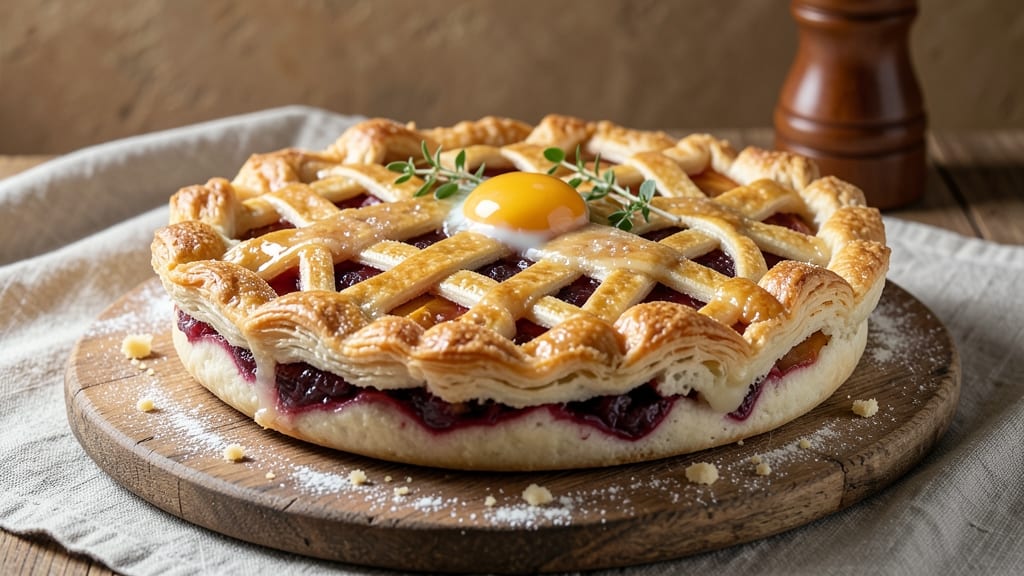
The secret to a flaky 9-inch double crust pie lies in two perfect doughs and a lattice top that locks in every juicy bite. ✨ I've perfected this technique over years of baking competitions, where judges could spot a poorly constructed crust from across the room.
The difference between a good pie and a great one often comes down to these details—crisp yet tender layers, precise lattice cuts, and proper venting for even baking.
This recipe delivers restaurant-quality results with simple ingredients and a method that even beginners can master. The dough uses cold butter cut into the flour for maximum flakiness, while the lattice top creates stunning visual appeal while keeping fillings moist.
Whether you're making a classic apple pie, rich pecan, or savory chicken pot pie, these techniques ensure professional results every time.
By following the step-by-step instructions for rolling, cutting, and assembling the lattice, you'll achieve a pie with crisp edges, tender layers, and a perfect golden-brown finish. The key is patience—letting the dough rest properly and baking at the right temperature prevents soggy bottoms and uneven browning.
This is the kind of pie that makes people ask for seconds and thirds.
Once you master this technique, you can adapt it to countless fillings while maintaining that signature flaky texture. The same principles apply whether you're working with fruit, custard, or savory mixtures. Let's get started on creating your showstopping pie.
Ingredients for 9 double crust pie
Mastering flaky pie crust starts with these precise ingredients and expert techniques.
| Ingredient | Amount | Notes |
|---|---|---|
| All-Purpose Flour 🌾 | 4 cups | Spooned and leveled, not packed |
| Unsalted Butter 🧈 | 1 cup | Cold, cubed, unsalted preferred |
| Ice Water 💧 | ½ cup | Chilled for dough elasticity |
| Granulated Sugar 🍚 | ½ tsp | For dough sweetness |
| Kosher Salt 🧂 | 1 tsp | Diamond Crystal preferred |
| Large Eggs 🥚 | 1 whole | Cold, for egg wash |
| Heavy Cream 🥛 | 2 tbsp | For egg wash richness |
| Granulated Sugar (for lattice) 🍚 | ¼ cup | For lattice coating |
| Pie Filling 🍎 | 7 cups | Classic apple, pecan, or savory |
| Cornstarch 🌾 | 1 tbsp | For filling thickening |
| Lemon Juice 🍋 | 1 tbsp | Freshly squeezed for brightness |
| Vanilla Extract 🌿 | 1 tsp | Pure vanilla preferred |
The butter is non-negotiable—use cold, unsalted cubes straight from the fridge. Plugrá or Land O'Lakes work best for their high fat content. Flour matters too: King Arthur or Gold Medal brands yield consistent results. Measure flour by spooning it into your cup and leveling—don't pack it down. The ice water is crucial for elasticity, so keep it chilled. For the lattice, use freshly cut strips—pre-cut dough dries out quickly and loses its crispness. If you're short on time, Trader Joe's sells pre-made lattice strips that work in a pinch.
No cold butter? Chilled shortening works as a substitute, though it lacks flavor. Running out of vanilla? Almond extract at half the amount provides depth. For the filling, classic apple works best, but pecan or chicken pot pie fillings adapt beautifully. The cornstarch is essential for thickening—don't skip it. If your filling needs more moisture, add 1 tbsp extra lemon juice for brightness. For a savory pie, substitute the sugar with 1 tsp salt and use chicken stock instead of water in the filling. Always use freshly ground spices—pre-ground loses potency quickly.
Store dough scraps between parchment paper for up to 3 days in the fridge. For longer storage, wrap the dough tightly in plastic and freeze for up to 3 months. Once baked, pies reheat best at 350°F for 10-15 minutes—cover with foil if reviving. The lattice design keeps fillings moist for 4-5 days at room temperature, but for best quality, refrigerate. Freeze whole pies (unbaked) for up to 2 months—just add 15-20 minutes to baking time. Always let pies cool completely before slicing to prevent soggy crust.
Why You'll Love This Recipe
- Foolproof Dough: I’ll never stress over pie crust again—just flour, butter, and ice water. The cold water keeps the butter from melting, and the dough comes together faster than I can say "lattice top."
- Golden Crust Magic: That crispy, flaky edge with a tender interior? It’s all in the butter-to-flour ratio. No fancy techniques—just a little patience when rolling, and you’ve got restaurant-quality crust every time.
- Weekend or Weeknight: Between us, I’ve used this for apple pies on Sundays and even a savory chicken pot pie on a Tuesday. The same dough works for anything, and leftovers? They’re even better reheated the next day.
- Budget-Friendly Luxury: Flour, butter, sugar—these are pantry staples that won’t break the bank. A single batch makes two pies, so I’m always covered for gatherings, potlucks, or just because. No wasted ingredients here.
Step-by-step instructions for perfect double crust pie with lattice top
Here's how to build a pie with layers so delicate they look like lace.
👨🍳 Step 1: Make the Dough and Chill for Flakiness
In a large bowl, combine the 4 cups All-Purpose Flour, 0.5 tsp Granulated Sugar, and 1 tsp Kosher Salt. Cut in the 1 cup Unsalted Butter using a pastry cutter or your fingers until the mixture resembles coarse crumbs with pea-sized butter pieces. This texture is crucial—it ensures maximum flakiness when baked.
Gradually add the 0.5 cup Ice Water, 1 tablespoon at a time, mixing gently with a fork until the dough just comes together. The dough should hold when pressed but not be sticky. Divide it into two equal portions, flatten into discs, wrap tightly in plastic, and refrigerate for at least 2 hours or up to 2 days. Chilling relaxes the gluten and prevents shrinking during baking.
🍳 Step 2: Roll and Assemble the Bottom Crust
On a lightly floured surface, roll one dough disc into a 12-inch circle, about ⅛-inch thick. Transfer carefully to a 9-inch pie dish, trimming any excess dough hanging over the edges. Press gently to create a ½-inch rim around the dish—this prevents filling from leaking and creates a sturdy base.
Preheat your oven to 375°F. Line the bottom crust with a sheet of parchment paper, fill with pie weights or dried beans, and bake for 15 minutes. This pre-baking step, called "blind baking," prevents a soggy bottom. Remove the weights and bake 5 more minutes until lightly golden. Let cool slightly while you prepare the filling.
🥘 Step 3: Prepare and Fill the Pie
In a medium bowl, combine the 7 cups Pie Filling, 1 tbsp Cornstarch, 1 tbsp Lemon Juice, and 1 tsp Vanilla Extract. Mix gently to thicken the filling slightly. Pour the filling into the pre-baked crust, spreading it evenly. The filling should come up to about ½-inch from the top edge.
Roll the second dough disc into another 12-inch circle. For the lattice top, cut the dough into 12 strips, about ½-inch wide. Arrange 6 strips horizontally across the filling, spacing them evenly. Fold back every other strip, then fold the unfolded strips up to create a woven pattern. Brush the lattice with a mixture of 1 whole Large Egg beaten with 2 tbsp Heavy Cream for a golden finish.
🔥 Step 4: Bake to Golden Perfection
Place the pie on a baking sheet (to catch any drips) and bake at 375°F for 40-45 minutes, until the lattice is deep golden brown and the filling is bubbling gently. Rotate the pie halfway through baking for even browning. The lattice should look delicate but sturdy, with crisp edges.
Let the pie cool completely on a wire rack for at least 2 hours before slicing. This resting period allows the filling to set and the lattice to crisp up fully. The contrast between the flaky, golden lattice and the juicy filling will make every bite worth the wait.
Pro Tips For Making 9 Double Crust Pie
- Chill the Dough Properly: Stick the dough disks in the fridge for at least 2 hours—yes, even if you’re eager to bake. I used to rush this and end up with a soggy bottom crust because the butter didn’t set enough. Cold dough = crispy, flaky layers that hold up to filling.
- Cut Butter in Small: Use a pastry cutter or your fingers to work the butter into the flour until it’s pea-sized, not larger. Overworking turns it into a paste, and you’ll end up with a tough crust. Stop when you can still see tiny butter flecks—this is non-negotiable for flakiness.
- Vent the Top Crust: Cut a few slits in the top crust before baking—about ½-inch wide, spaced 2 inches apart. I skipped this once and ended up with a puffed, uneven pie that looked like a failed soufflé. Venting keeps the pie from cracking and lets steam escape.
- Use Ice Water Sparingly: Measure the water precisely—just enough to bind the dough without making it sticky. Too much water weakens the gluten, and you’ll end up with a dense, chewy crust. If it feels dry, add a teaspoon at a time, but don’t overdo it.
Creative variations of this dish
Classic Apple Pie Twist
Swap the standard filling for a spiced apple-cinnamon mixture with a touch of apple cider vinegar (2 tbsp) to brighten flavors. Add ½ cup chopped pecans to the lattice strips before baking for extra crunch.
I like using Granny Smith and Honeycrisp apples—their tart-sweet balance makes this a crowd favorite. 🍏
Savory Chicken Pot Pie
Transform this dessert into a hearty meal by using a creamy chicken and vegetable filling with thyme, rosemary, and a splash of sherry. Replace the sugar in the dough with 1 tsp salt, and brush the lattice with garlic-infused olive oil instead of egg wash.
Serve with a side of crusty bread for dipping. 🍗
Pecan Pie Lattice
For a Southern-inspired variation, use a rich pecan filling with corn syrup, brown sugar, and eggs. Roll out the lattice strips slightly thinner (about ¼-inch) to achieve a more delicate texture. Sprinkle flaky sea salt on top before baking for a sweet-savory contrast. 🌰
Mini Hand Pies
Cut the dough into 4-inch circles and fill with your favorite mixture—apple, cherry, or even sweet potato. Fold the dough over to create half-moon shapes, crimp the edges with a fork, and brush with egg wash.
Bake at 375°F for 20-25 minutes until golden. These are perfect for picnics or potlucks! 🥧
Gluten-Free Adaptation
Replace the all-purpose flour with a 1:1 gluten-free baking blend (like King Arthur's Measure for Measure). Add ½ tsp xanthan gum to improve texture. Chill the dough 30 minutes extra since gluten-free doughs are more fragile. The lattice will still crisp beautifully—just handle it gently when cutting strips. 🌾
Seasonal Citrus Twist
Use a zest-infused filling with orange, lemon, or lime for a refreshing spring/summer pie. Add 1 tbsp citrus zest to the filling and garnish the lattice with thin citrus slices before baking. The bright flavors pair perfectly with the buttery crust. 🍋
Nutrition facts
Frequently asked questions
Can I make this lattice pie without a food processor?
The dough requires only a pastry cutter or your fingers to cut cold butter into the flour until it resembles coarse crumbs. For the lattice, use a sharp knife to cut precise ½-inch strips—just keep your knife sharp and work on a lightly floured surface. The key is patience and even pressure.
Why is my lattice top puffing up instead of staying flat?
This usually happens when the dough strips aren't pressed down firmly enough before baking. To fix it, gently weigh down the lattice with a pie weights or dried beans during the initial 15-minute blind bake. Also ensure your oven isn't too hot—375°F is ideal for even baking.
Can I use frozen dough for this recipe?
Yes, but thaw it completely in the refrigerator for 24-48 hours before rolling. Never thaw at room temperature, as this causes uneven texture. For best results, let the dough sit at room temperature for 10-15 minutes before rolling to improve elasticity.
How do I fix a pie that's leaking filling?
This happens when the crust edges aren't properly sealed. To salvage it, chill the pie for 15 minutes, then add a second layer of dough strips around the edges, pressing firmly. Bake for an additional 10-15 minutes to set the extra dough.
What's the best way to store leftover pie?
For short-term storage, keep it at room temperature for up to 2 days in an airtight container. For longer storage, refrigerate for up to 5 days or freeze for 3 months. To reheat, warm at 350°F for 15-20 minutes**, covering with foil to prevent drying.